Listen to your resting heart: why your HRV trend says more than one night
Quick answer
Heart rate variability, or HRV, is the small change in time between one heartbeat and the next. It moves from night to night with sleep, stress, alcohol, illness and training, so one reading says little. Your HRV trend over a week or more, read against your own normal rather than someone else's, says far more.
Key takeaways
- HRV is the variation in time between heartbeats; a healthy heart is not a metronome.
- One night moves with sleep, stress, alcohol and illness; a trend over a week or more is steadier.
- HRV falls with age and differs between people, so your own normal is the fair comparison.
- A wearable can show a pattern but cannot diagnose; a heart rate that is consistently fast, slow or irregular is one for a doctor.
What is heart rate variability?
Heart rate variability, or HRV, is the small change in time between one heartbeat and the next. If your heart beats 60 times a minute, the gaps between beats are not each exactly one second. Some are a little longer, some a little shorter.
A 2017 review in Frontiers in Public Health by Shaffer and Ginsberg puts it simply: a healthy heart is not a metronome. The variation comes from the constant conversation between the heart and the nervous system, in particular the parasympathetic side, which governs rest and recovery, and the sympathetic side, which prepares the body for effort.
HRV is usually reported in milliseconds. Many wearables that sit on the finger or wrist estimate it from the pulse during sleep, when the body is still and the conditions are similar from one night to the next.
Why does HRV change from night to night?
Because a lot of ordinary life reaches it. The Shaffer and Ginsberg review lists the things that influence HRV, among them the time of day, body temperature, sleep, breathing, posture, physical activity, age and sex.
Three of them come up again and again in research:
- Stress. A 2018 meta-analysis in Psychiatry Investigation reviewed 37 studies and found that HRV changed in response to stress in most of them, usually with less activity on the rest side of the nervous system.
- Alcohol. A 2018 study in JMIR Mental Health followed 4,098 Finnish employees in everyday life and compared each person’s nights with and without alcohol. In the first three hours of sleep, alcohol lowered parasympathetic activity in a dose-dependent way, and the effect was measurable even after low intake.
- Training load. HRV responds to how hard the body has been working, which is why sports scientists track it in athletes, as the 2013 Plews review in Sports Medicine describes.
Add a late dinner, a short night, a long drive or a difficult conversation, and it is easy to see why a single reading jumps about.
Why does your HRV trend say more than one night?
One night is a snapshot. It tells you how your body was during a few hours of sleep after one particular day. The trend is the story.
Researchers who use HRV to follow athletes face the same problem. A 2013 review in Sports Medicine by Plews and colleagues looked at how HRV had been read in elite endurance athletes and recommended averaging over several days rather than reading single days on their own, because daily values are noisy.
Picture two weeks of nights. In the first, the readings bounce around your usual level: lower after a late wedding, higher after a quiet weekend at home. In the second, they sit a little lower every night, and you have also been sleeping less and feeling flat. The first week is ordinary life. The second is a pattern.
For everyday life the same idea holds. A low night after a wedding or a late flight is expected. A level that drifts down slowly over a week or two, with nothing obvious to explain it, is the kind of change that is worth noticing.
Why compare with your own normal, not someone else’s?
HRV varies a great deal between people. The Shaffer and Ginsberg review notes that time-domain HRV declines with age, with the steepest fall early in adult life, and that values depend on sex, resting heart rate and how the measurement was taken. The Plews review describes each athlete as having an individual HRV fingerprint.
That makes a chart of average values by age a blunt tool. Two healthy people of the same age can sit far apart and both be fine. The fairer comparison is you against yourself: the same sensor, at the same point in the night, compared with your own usual level over the past weeks.
This is also why a higher number is not automatically better. The Plews review describes elite athletes whose HRV fell even as their fitness improved. The direction of your own trend, and what else was going on in your life, tells you more than the figure.
How does resting heart rate fit in?
Resting heart rate is the number of beats per minute when you are awake, calm and still. The British Heart Foundation gives between 60 and 100 beats per minute as usual for adults, and notes that what is usual varies with age, health and sex. Exercise, alcohol, smoking, dehydration, fever, infections and some medicines all change it. Our guide to what a normal resting heart rate is covers the ranges by age and what moves yours.
The two are linked. The Shaffer and Ginsberg review lists heart rate itself among the things that influence HRV. Read side by side, against your own usual levels, they give a fuller picture than either alone. Our guide to the heart rate side is gathered in the heart and stress section.
How to read your HRV trend
- Compare like with like. Readings taken during sleep, from the same device, are the most comparable. A reading taken after a flight of stairs is a different measurement.
- Give it a week before you read anything. It takes several nights to see your own usual level. Two to four weeks gives a clearer picture.
- Note what happened on the unusual nights. A late meal, a hard workout, a drink, a stressful day, a cold. Patterns often explain themselves.
- Look at the direction, not the day. A single low night is common. A slow drift over a week or more is the signal.
- Read it next to how you feel. If the trend is down and you feel tired, that is useful information. If the trend is down and you feel fine, keep watching before you draw conclusions.
What moves HRV in a Gulf week?
Life here has its own rhythm, and it reaches the heart as it reaches everything else.
Late nights. Social life in the Gulf often runs late, especially in the cooler months and at weekends. Sleep is one of the factors the Shaffer and Ginsberg review lists.
Ramadan. Meal and sleep times shift for a month. Our guide on how Ramadan changes your sleep covers what that does to the night.
Summer nights. Hot nights are a common complaint here, and body temperature is on the list of things that influence HRV. See sleeping through a Gulf summer for what helps.
Busy weeks. Stress shows up in HRV, as the Psychiatry Investigation meta-analysis found. Our guide to finding the quiet hours in a loud week looks at the working-day side.
When should you see a doctor?
The British Heart Foundation advises contacting a doctor if your heart rate is consistently fast, slow or irregular, especially if you also feel faint or dizzy. It also notes that heart rate monitors can help you keep track of your health but cannot diagnose a condition.
A wearable shows patterns. It does not tell you what caused them. If a change worries you, or if you have chest pain, breathlessness or palpitations, speak to a doctor, and seek help straight away if the symptoms are severe.
Where does Sisly fit?
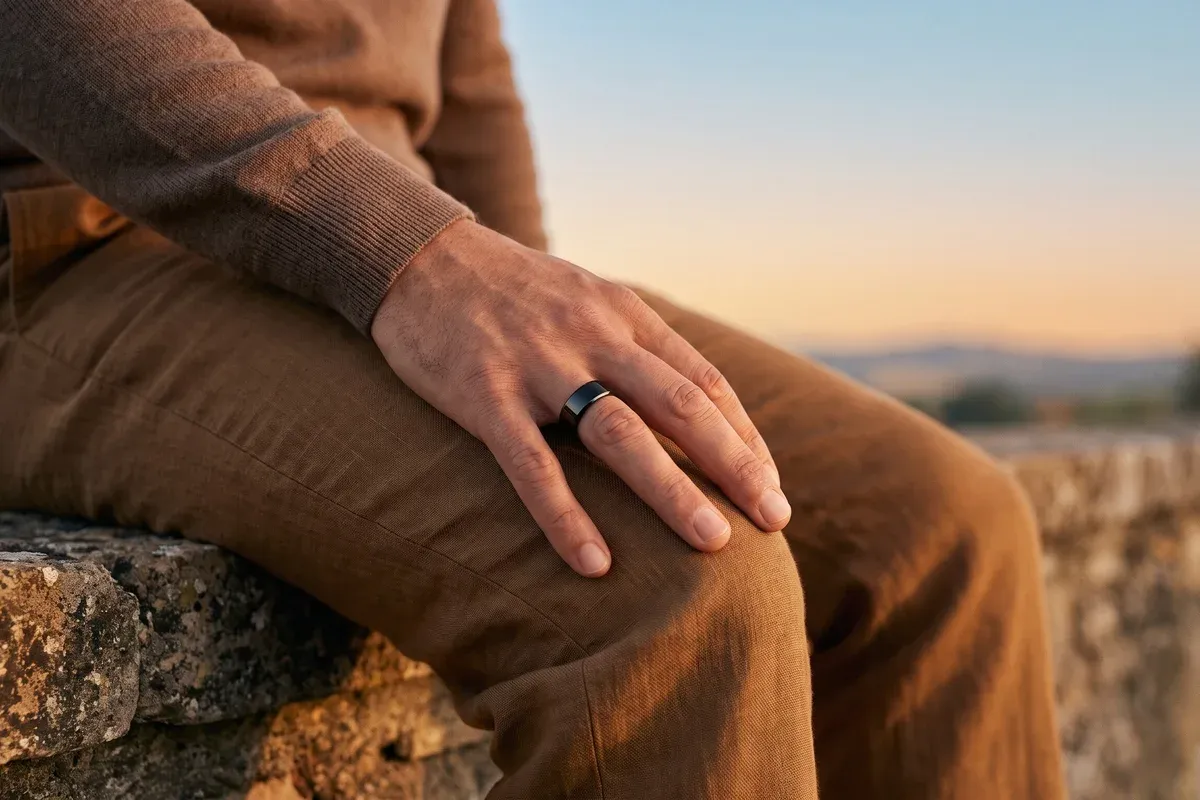
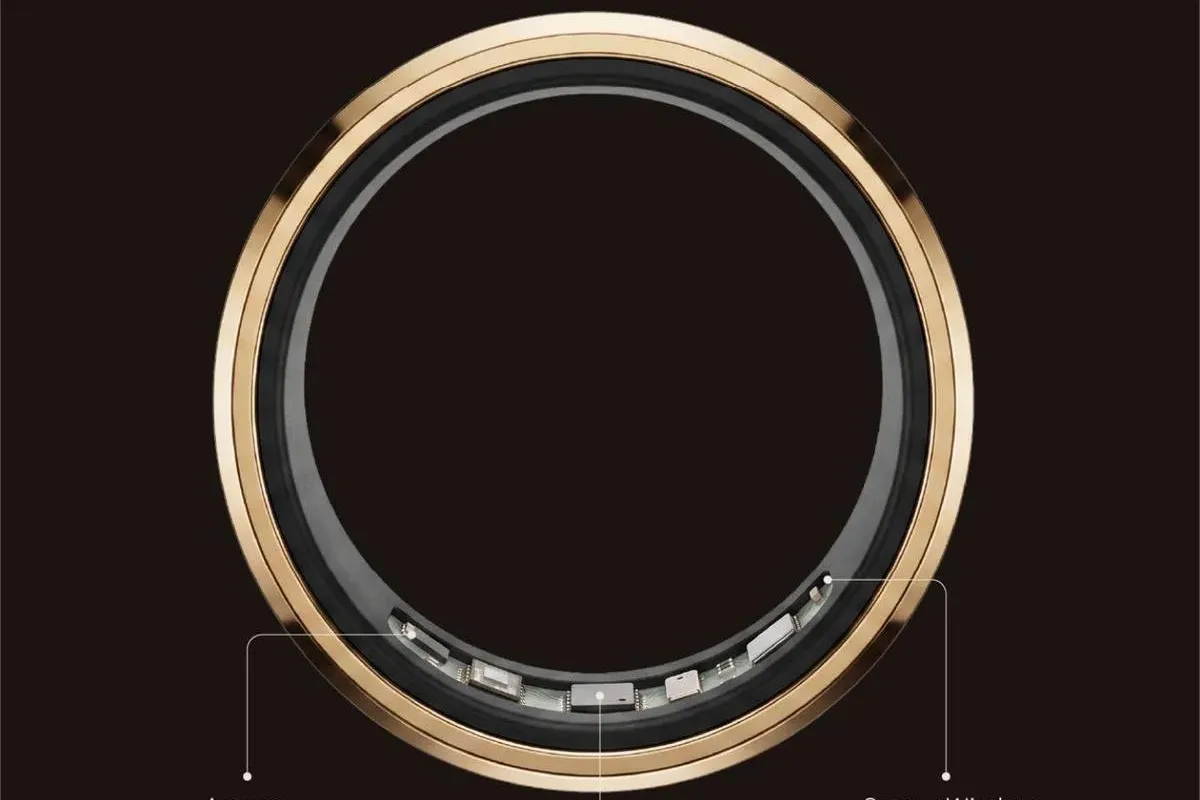
Sisly is a titanium ring or band that reads sleep, energy, stress, heart rate variability, activity and skin temperature against your own normal. That is the approach this article describes: your readings compared with you, not with a table of strangers. It is AED 999, paid once, with no subscription, and a charge lasts about 7 days.
Questions, answered
- What is a normal HRV?
- There is no single figure that suits everyone. HRV depends on age, sex, fitness, the time of day and how it is measured, and a 2017 review in Frontiers in Public Health notes that time-domain HRV declines with age. That is why a comparison with your own usual level, taken in the same conditions each night, is more useful than a chart of other people's numbers.
- Why is my HRV low today?
- Many ordinary things can lower HRV for a night: a late or short sleep, a stressful day, a hard training session, alcohol, or the start of an illness. A 2018 meta-analysis found HRV changed with stress in most of the 37 studies it reviewed. One low night on its own is common and says little. A lower level that holds for a week or more is worth noticing.
- Does alcohol lower HRV?
- Yes, in the hours after drinking. A 2018 study of 4,098 Finnish employees in JMIR Mental Health compared each person's nights with and without alcohol. In the first three hours of sleep, alcohol lowered the rest side of the nervous system in a dose-dependent way, and the effect was measurable even after low intake.
- Is a higher HRV always better?
- Not always. HRV is linked with the body's ability to adapt, but the right level is personal. A 2013 review of elite endurance athletes in Sports Medicine describes cases where HRV fell even as fitness improved. For most people, the direction of your own trend over weeks is more telling than whether one night's number is high or low.
- What is a normal resting heart rate?
- The British Heart Foundation gives a resting heart rate of between 60 and 100 beats per minute as usual for adults, and notes that what is usual varies with age, health and sex. Exercise, alcohol, smoking, dehydration, fever and some medicines all change it.
- How long does it take for an HRV trend to mean something?
- A week is a sensible minimum, because it takes in working days, weekends and the ordinary ups and downs of sleep. Research in athletes uses averages over several days rather than single mornings for the same reason. Over two to four weeks you begin to see your own usual level, and a slow drift up or down becomes easier to spot.
- When should I see a doctor about my heart rate?
- The British Heart Foundation advises contacting a doctor if your heart rate is consistently fast, slow or irregular, especially if you also feel faint or dizzy. It also notes that heart rate monitors can help you track your health but cannot diagnose a condition. Chest pain or breathlessness needs medical help straight away.
This article is general information, not medical advice. Speak to your doctor before changing your diet or exercise.
Sources
- Shaffer F, Ginsberg JP, An overview of heart rate variability metrics and norms, Frontiers in Public Health (2017) ·
- Kim HG et al., Stress and heart rate variability: a meta-analysis and review of the literature, Psychiatry Investigation (2018) ·
- Pietilä J et al., Acute effect of alcohol intake on cardiovascular autonomic regulation during the first hours of sleep, JMIR Mental Health (2018) ·
- Plews DJ et al., Training adaptation and heart rate variability in elite endurance athletes, Sports Medicine (2013) ·
- British Heart Foundation, Heart and pulse rate: what's normal and how to check it ·