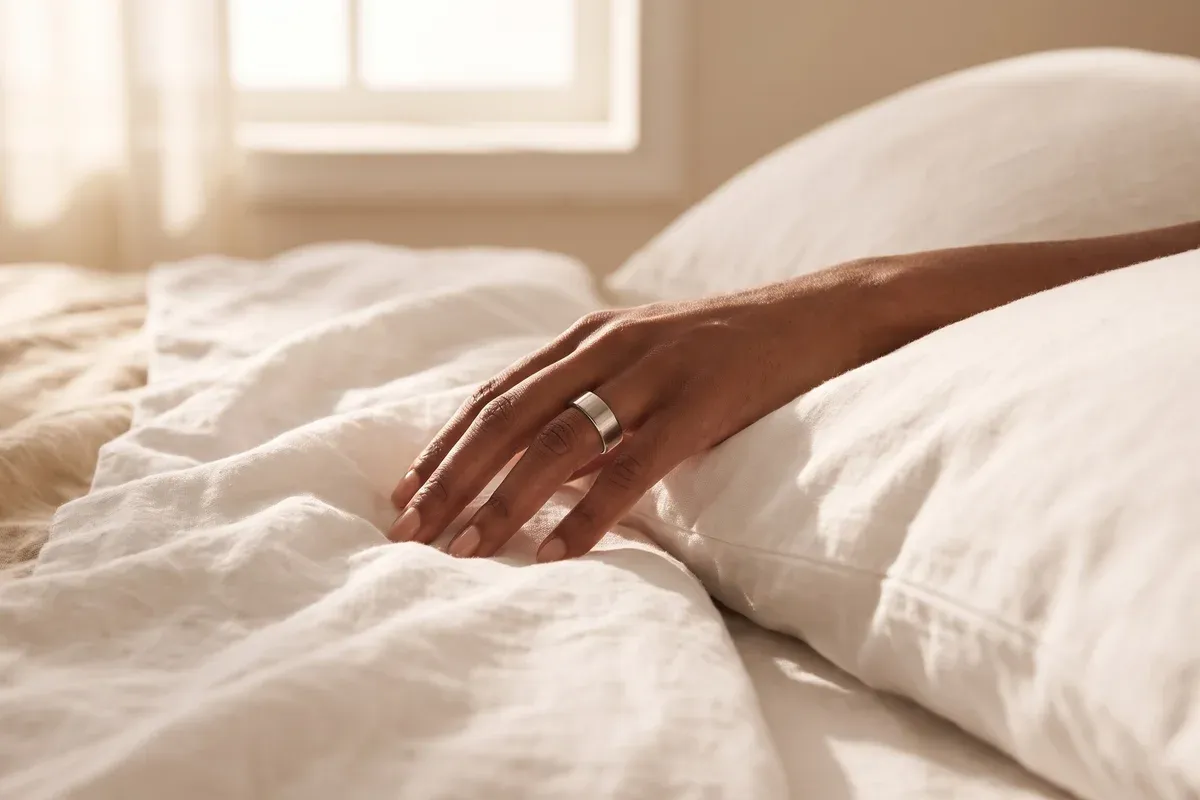
How to fall asleep faster in a hot city: what the research says helps

Quick answer
To fall asleep fast in a hot city, help your body cool down. Keep the bedroom cool, dark and quiet, take a warm shower or bath one to two hours before bed, stop caffeine at least six hours before, and keep the last hour calm and away from screens. Heat makes waking more likely, so the room matters most.
Key takeaways
- Heat exposure during sleep increases wakefulness and reduces deep and dream sleep, according to a 2012 review in the Journal of Physiological Anthropology.
- A warm bath or shower of 40 to 42.5 °C, one to two hours before bed, for as little as 10 minutes, shortened the time taken to fall asleep in a 2019 meta-analysis.
- Caffeine taken six hours before bed still cut sleep by more than an hour in a 2013 study.
- The CDC suggests a quiet, cool bedroom, screens off 30 minutes before bed and the same bedtime every day.
Why is it harder to fall asleep in a hot city?
Your body needs to cool down a little to fall asleep. Core body temperature drops in the evening as part of the circadian rhythm, the body’s roughly 24-hour internal clock, and that drop is one of the signals that brings sleep on.
Heat works against it. A 2012 review by Okamoto-Mizuno and Mizuno in the Journal of Physiological Anthropology found that, with bedding and clothing as people really sleep, heat exposure increases wakefulness and reduces slow wave sleep, the deepest stage, and rapid eye movement sleep, the stage most linked with dreaming. Humid heat adds further load on the body.
In Dubai, Abu Dhabi or Riyadh in July, the air outside may never feel cool at night. Sleep then depends on the room you make, not the weather you get. For the wider picture of what summer does to the body, read what 46 degrees does to you.
How to fall asleep fast in the heat: the steps
These steps come from the CDC’s sleep guidance, the NHS, Saudi Arabia’s Ministry of Health, and the research on temperature and sleep listed at the end of this article.
- Close curtains and blinds on sun-facing windows during the day, so the bedroom stores less heat.
- Set the air conditioning so the bedroom is already cool when you go in, rather than starting it at bedtime.
- Choose light, breathable bedding and nightwear.
- Take a warm shower or bath one to two hours before bed, for at least 10 minutes.
- Stop coffee, tea and other caffeine at least six hours before bed.
- Eat your last large meal well before bedtime.
- Put phones and screens away at least 30 minutes before sleep.
- Keep the bedroom dark and quiet, with blackout curtains or earplugs if needed.
- Go to bed and get up at the same time every day, weekends included.
- Go to bed when you feel sleepy, not just because it is time.
The rest of this guide explains why each one helps.
How cool should your bedroom be for sleep?
Cool, dark and quiet. The CDC suggests keeping the bedroom quiet, relaxing and at a cool temperature, and the NHS lists a dark, quiet room among its first self-help steps for sleep. Neither gives a single number, because the right setting depends on your bedding, the humidity and who shares the room.
A practical test in a Gulf summer: when you get into bed, you feel slightly cool under a light cover. If you wake warm towards dawn, the room is likely heating up overnight, for example because the air conditioning cycles off or the walls have stored the day’s heat.
The NHS advice for hot weather also applies at home in the Gulf: keep curtains and blinds closed through the day, and let air in only when it is cooler outside. It adds that electric fans help only when the temperature is below 35 degrees, which is worth knowing on the hottest nights.
Does a warm shower really help you sleep in the heat?
It sounds backwards, but the research supports it. A 2019 systematic review and meta-analysis by Haghayegh and colleagues in Sleep Medicine Reviews found that a warm bath or shower of 40 to 42.5 °C was linked with better self-rated sleep quality and sleep efficiency. When it was taken one to two hours before bedtime, for as little as 10 minutes, people also fell asleep sooner.
The authors explain the mechanism. Warm water draws blood to the palms and soles, which helps the body shed heat. After the shower, the body releases heat faster and core temperature falls, which is the same drop that comes before sleep.
Timing matters. A hot shower straight before bed leaves you warm when you want to be cooling. One to two hours ahead lets the cooling happen as you settle.
What should you avoid in the evening?
Caffeine
The NHS advises no tea or coffee in the six hours before bed. A 2013 study by Drake and colleagues in the Journal of Clinical Sleep Medicine gave people 400 mg of caffeine, roughly two to three cups of coffee, six hours before bedtime; it still reduced sleep by more than an hour. In the Gulf, that includes the evening karak, cold brew and energy drinks.
Late, heavy meals
The CDC and the NHS both suggest avoiding a large meal late at night. Late dinners are common in summer, when evenings are the most comfortable time to be out. Eating earlier, or keeping the late meal light, makes settling easier.
Screens and bright light
The CDC suggests turning off electronic devices at least 30 minutes before bed. The Dubai Health Authority notes that blue light from screens delays melatonin, the hormone that signals night to the body, and suggests putting screens away 30 to 60 minutes before sleep.
Late exercise
The NHS suggests not exercising in the four hours before bed. In summer, that can clash with the only cool hours of the day. If evening is your only option, finish earlier in the evening and leave time to cool down.
What if you still cannot fall asleep?
Some nights will be slow whatever you do. The NHS suggests a few habits that help the next night more than the current one:
- Go to bed only when you feel sleepy.
- Relax for at least an hour before bed, with reading, a warm shower or quiet time.
- Get up at the same time the next morning, even after a short night.
- Do not sleep in after a short night, and do not nap through the day to catch up.
Saudi Arabia’s Ministry of Health adds one more: if you have not fallen asleep within about 20 minutes, leave the bedroom and do something calm and light until you feel sleepy. Its guidance also describes the ideal sleep environment as quiet, dark and cool, and suggests no naps after 3 pm.
Adults need seven or more hours of sleep, according to the American Academy of Sleep Medicine and the Sleep Research Society. One slow night does not change that picture. A pattern over a week or two tells you far more. Our guide to sleeping through a Gulf summer looks at the season as a whole.
What are common mistakes when sleeping in the heat?
- Cooling the room only at bedtime. Walls and furniture hold heat; the room takes time to cool.
- A hot shower right before bed. Warmth that should have left the body is still there.
- An afternoon karak at five. Six hours is closer to eleven at night.
- Weekend drift. Very late weekend nights make Sunday night harder to start.
- Lying awake watching the clock. It adds tension to a night that needs less.
During Ramadan, the night changes shape again; how Ramadan changes your sleep covers that month.
When should you see a doctor about sleep?
The NHS suggests seeing a doctor if:
- changing your sleep habits has not helped;
- you have had trouble sleeping for months;
- it is affecting your daily life in a way that makes it hard to cope.
Loud snoring, pauses in breathing and dozing while driving are also worth raising with a doctor.
Where Sisly fits
Sisly is a titanium ring or band that reads sleep, energy, stress, heart rate variability, activity and skin temperature against your own normal, so you can see how your nights change as the season does. It is AED 999, paid once, with no subscription, about 7 days between charges and readings hosted in the UAE. For a closer look at how rest shows up during the day, read finding the quiet hours.
Questions, answered
- What is the fastest way to fall asleep when it is hot?
- There is no single trick, but cooling the body is the common thread. Keep the bedroom cool, dark and quiet, use light bedding, and take a warm shower one to two hours before bed so the body sheds heat as you lie down. Stop caffeine by mid-afternoon and put screens away at least 30 minutes before sleep. Together these shorten the wind-down for most people.
- Does a warm shower before bed help in hot weather?
- It can. A 2019 meta-analysis in Sleep Medicine Reviews found that a warm bath or shower of 40 to 42.5 °C, taken one to two hours before bedtime for as little as 10 minutes, shortened the time taken to fall asleep. Warm water draws blood to the hands and feet, which helps the body release heat and lower its core temperature afterwards, the same drop that comes before sleep.
- What temperature should my bedroom be for sleep?
- Health authorities describe the bedroom as cool rather than giving one figure; the CDC suggests keeping it quiet, relaxing and at a cool temperature. The right setting depends on your bedding, humidity and who shares the room. In the Gulf, the practical test is simple: when you get into bed, you feel slightly cool under a light cover, not warm.
- Why do I wake up in the night when it is hot?
- Heat makes the body work to release warmth, and that effort interrupts sleep. A 2012 review by Okamoto-Mizuno and Mizuno found that heat exposure during sleep increases wakefulness and reduces slow wave and rapid eye movement sleep, and that humid heat adds further load. In summer, a room that warms towards dawn, for example when the air conditioner cycles off, can bring that waking earlier.
- How long before bed should I stop drinking coffee?
- At least six hours. The NHS advises no tea or coffee in the six hours before bed, and a 2013 study in the Journal of Clinical Sleep Medicine found that 400 mg of caffeine, roughly two to three cups of coffee, taken six hours before bedtime still reduced sleep by more than an hour. Karak, green tea, cola and energy drinks all count as caffeine.
- When should I see a doctor about trouble sleeping?
- The NHS suggests seeing a doctor if changing your sleep habits has not helped, if you have had trouble sleeping for months, or if it is affecting your daily life in a way that makes it hard to cope. Loud snoring, pauses in breathing and sleepiness at the wheel are worth raising too. Trouble sleeping has many causes, and a doctor can look at yours.
This article is general information, not medical advice. Speak to your doctor before changing your diet or exercise.
Sources
- Okamoto-Mizuno K, Mizuno K. Effects of thermal environment on sleep and circadian rhythm. Journal of Physiological Anthropology, 2012 ·
- Haghayegh S et al. Before-bedtime passive body heating by warm shower or bath to improve sleep: a systematic review and meta-analysis. Sleep Medicine Reviews, 2019 ·
- Drake C et al. Caffeine effects on sleep taken 0, 3, or 6 hours before going to bed. Journal of Clinical Sleep Medicine, 2013 ·
- CDC. About sleep ·
- Saudi Ministry of Health. Healthy lifestyle: sleeping ·
- NHS. Insomnia ·
- NHS. Heatwave: how to cope in hot weather ·
- Dubai Health Authority. Ramadan Health Guide 2026 (sleep environment and screens) ·
- Watson NF et al. Recommended amount of sleep for a healthy adult: AASM and SRS consensus statement. Journal of Clinical Sleep Medicine, 2015 ·