What 46°C does to your body, and why it settles
Quick answer
At 46°C your body sends more blood to the skin and sweats to shed heat, so your heart beats faster. Heat exhaustion symptoms include dizziness, headache, nausea, cramps, heavy sweating and thirst. Most people feel better within 30 minutes of cooling down. Confusion, hot dry skin or a seizure are heat stroke signs and need an ambulance.
Key takeaways
- In the heat, the heart pumps more blood to the skin, and cardiac output can rise up to twofold, mostly through a faster heart rate.
- Heat exhaustion usually eases within 30 minutes of rest, shade, fluids and cooling. If it does not, treat it as an emergency.
- Confusion, hot skin that has stopped sweating, a seizure or collapse are heat stroke signs. Call 998 in the UAE or 997 in Saudi Arabia.
- The body adapts to heat over about 7 to 14 days, and loses some of that adaptation after a week or more away.
- Humid coastal heat is harder on the body than dry heat, because less of your sweat evaporates.
What happens inside your body at 46°C?
Your body keeps its core close to 37°C whatever the weather does. On a 46°C afternoon, the air is hotter than your skin, so your body cannot lose heat to the air the way it does on a mild day. It gains heat instead, from the sun, from hot pavements and from its own work.
The body answers in two ways. It widens the blood vessels in the skin, so warm blood from the core can reach the surface. And it sweats, so that evaporation can carry heat away.
Both of those cost something. A 2015 review by Craig Crandall and Thad Wilson in the journal Comprehensive Physiology describes blood flow to the skin rising by as much as 7 to 8 litres a minute under heat stress. To keep that going without letting blood pressure fall, the heart has to move more blood. The same review found cardiac output, the amount of blood the heart pumps each minute, can rise up to twofold, mostly through a faster heart rate.
Sweat has its own cost: water and salt. Every litre you lose has to come back through what you drink and eat.
The World Health Organization puts it plainly in its heat and health fact sheet: the strain the body takes on to cool itself also stresses the heart and kidneys.
Why does humidity make it harder?
Sweat cools you only when it evaporates. In dry heat, most of it does. In humid heat, less of it can.
A 2023 review in Environmental Health Perspectives, led by Jane Baldwin, explains that as humidity rises, a smaller share of the sweat you make evaporates, and the rest drips off or sits on the skin. You lose the water without getting the cooling.
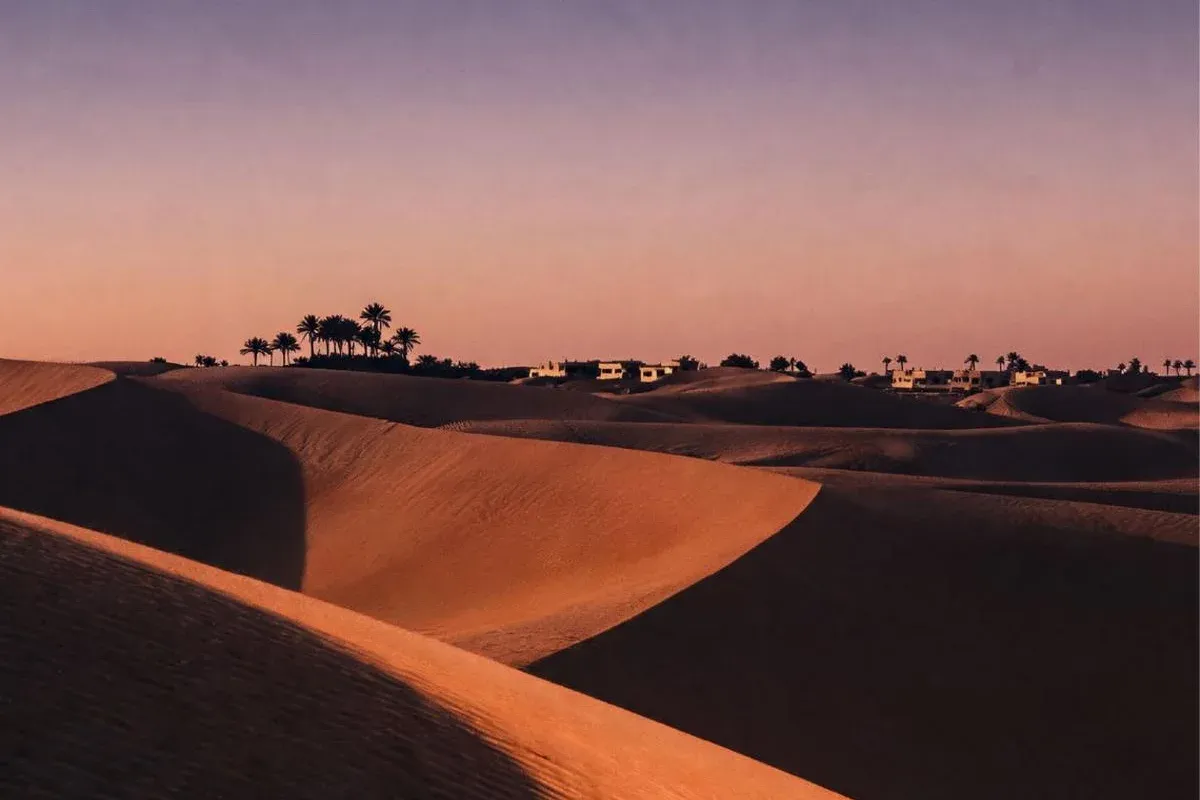
That is why a humid August evening on the coast of Dubai or Abu Dhabi can feel harder than a hotter, drier afternoon inland. The thermometer tells only half the story.
How hot does a Gulf summer actually get?
The World Meteorological Organization publishes climate normals, the averages for each month over 30 years. The figures below are the 1991 to 2020 normals for three stations.
| Station | Average July high | Average August high | Average August low |
|---|---|---|---|
| Dubai International Airport | 41.5°C | 41.9°C | 31.5°C |
| Al Ain International Airport | 44.9°C | 44.6°C | 30.6°C |
| Riyadh | 43.4°C | 43.6°C | 29.5°C |
Those are averages, so many days are hotter. At Al Ain, an afternoon at 46°C is only a little above an ordinary July day.
The low matters as much as the high. In Dubai, the average August night-time low is 31.5°C. The body gets little chance to shed the day’s heat overnight, which is part of why the season wears on sleep and on the heart.
Why does your heart rate rise in the heat?
Heat and heart rate move together for a simple reason. With more of your blood out in the skin, less of it returns to the heart with each beat. The heart keeps the flow up by beating more often.
You may notice this as a resting heart rate a few beats higher than usual during a hot spell, or a walk that feels harder than the same walk in February. Neither is a sign that something is wrong on its own. It is the body doing its cooling work.
It carries on at night. A 2025 study in BMC Medicine by Fergus O’Connor and colleagues followed 47 adults aged 65 and over in Queensland, Australia, with wearables and bedroom temperature sensors. Compared with nights below 24°C, bedrooms at 28 to 32°C were linked to about three times the odds of a meaningful drop in heart rate variability, along with higher heart rates. The authors suggest keeping bedrooms at or below 24°C for older adults.
Heart rate variability, or HRV, is the small change in time between one heartbeat and the next. It tends to be higher when the body is at rest and lower when it is under load, whether that load is stress, illness, a late meal or heat. Read more about it in what your resting heart is telling you.
What are the symptoms of heat exhaustion?
Heat exhaustion is what happens when the body is losing water and salt faster than it can replace them, and is starting to struggle to stay cool. The heat exhaustion symptoms the NHS lists are:
- tiredness
- dizziness
- a headache
- feeling sick or being sick
- heavy sweating, with skin that turns pale and clammy
- cramps in the arms, legs or stomach
- a high temperature
- being very thirsty
- feeling irritable
The US National Institute for Occupational Safety and Health (NIOSH) adds weakness and passing less urine than usual.
These signs can come on during a long walk at the wrong hour, a football match on a warm evening, a day of outdoor work, or simply a long wait in a car park.
What helps someone with heat exhaustion?
The NHS gives four steps:
- Move the person to a cool place.
- Take off clothing they do not need, such as a jacket or socks.
- Give them plenty of water to drink. A sports drink or oral rehydration solution also helps.
- Cool their skin. Spray or sponge them with cool water and fan them. Cold packs wrapped in a cloth, under the armpits or on the neck, help too.
The person should start to cool down and feel better within 30 minutes. If they do not, it is no longer heat exhaustion to be handled at home.
What are the signs of heat stroke?
Heat stroke is the serious end of heat illness. NIOSH describes it as the point where the body can no longer control its temperature, and says body temperature can climb to 41°C or more within 10 to 15 minutes. The WHO calls heatstroke a medical emergency.
The heat stroke signs the NHS lists are:
- still being unwell after 30 minutes of rest in a cool place, cooling and fluids
- a very high temperature
- hot skin that is not sweating
- a fast heartbeat
- fast breathing
- confusion and a lack of coordination
- a seizure or fit
- loss of consciousness
If you see any of these, call an ambulance straight away: 998 in the UAE, 997 in Saudi Arabia. Keep cooling the person while you wait, with cool water on the skin, wet cloths and moving air.
Who feels the heat most?
Heat affects everyone, but not equally. The WHO names people over 65, people with heart disease, lung conditions, diabetes or kidney disease, and people who live alone. The NHS adds babies and children aged 5 and under, and people who take several medicines, or medicines that change how the body handles heat.
If you take regular medicine, ask your doctor or pharmacist whether it affects how you cope in the heat. Do not stop or change a medicine on your own.
Work matters as much as health. People who work outside, drive for a living or cook in hot kitchens carry more heat through the day than people who move between air-conditioned rooms. For how teams can plan around that, see wellbeing at work in a Gulf summer.
Why does the heat settle after a week or two?
The body learns. Acclimatisation is the name for the changes that come with repeated time in the heat, and they are real and measurable.
According to NIOSH, an acclimatised body starts sweating earlier, makes more sweat and loses less salt in it. It can do the same work at a lower core temperature and a lower heart rate. For people new to the heat, NIOSH says this takes about 7 to 14 days of gradually longer exposure. People who have been used to heat before adapt faster.
It also works in reverse. After a week or more away, some of the adaptation fades, and it typically takes 2 to 3 days to return.
That has a Gulf-specific meaning. Many families spend part of July and August somewhere cooler. The first few days back, in the middle of the hottest weeks, are when the body is least ready for the heat. The same is true in May, when the first hot days arrive before the body has caught up.
This is also why the pattern in your readings tends to settle. A resting heart rate that climbed in the first hot week often eases as the body adapts, even though the weather has not changed.
How does the heat change your sleep?
To fall asleep, the body’s core temperature drops a little. A warm room slows that drop.
A 2012 review by Kazue Okamoto-Mizuno and Koh Mizuno in the Journal of Physiological Anthropology found that heat exposure during sleep increases time awake and reduces both slow-wave sleep, the deepest stage, and REM sleep. Humid heat adds to the load.
A 2022 study in One Earth by Kelton Minor and colleagues used more than 7 million nights of sleep data from wristbands in 68 countries. On nights above 30°C, sleep fell by an average of just over 14 minutes, mostly because people fell asleep later. Older adults and women were affected more.
With Dubai’s August nights averaging 31.5°C outside, the bedroom does most of the work. We have written a full guide to sleeping through a Gulf summer, and a shorter one on falling asleep faster in a hot city.
Which hours of the day are hardest on the body?
Governments in the Gulf answer this question every year with a law.
In the UAE, outdoor work in direct sunlight is not allowed between 12:30 pm and 3 pm from 15 June to 15 September, according to the UAE Government portal. In Saudi Arabia, the Ministry of Human Resources and Social Development bans work under the sun from 12 noon to 3 pm over the same dates.
The NHS gives similar advice for heatwaves in the UK: stay in the shade, especially between 11 am and 3 pm, and avoid exercise or activity that makes you hotter.
For walking and running, that leaves early morning and the hours after sunset. Our guide to running and walking routes in Dubai looks at which places work at which time of year.
What helps on a 46°C day?
Most of what helps is plain and familiar. It works because it lowers the heat load or replaces what the body loses.
Keep the heaviest part of the day for the cooler hours. A walk, a workout or a long errand costs less before 8 am or after sunset.
Drink regularly through the day. The NHS recommends extra fluids in hot weather and suggests going easy on alcohol, caffeine and hot drinks. People who sweat heavily also lose salt, which is why a sports drink or oral rehydration solution helps after a long, hot effort.
Look for shade and moving air. Shade changes how much heat reaches you. A breeze or a fan helps sweat evaporate.
Cool the bedroom. The NHS suggests keeping curtains and blinds closed while the sun is on the windows. The research above points to a cooler bedroom as one of the most useful changes for sleep and for the heart at night.
Give yourself time after travel. The first few days back from somewhere cooler, or the first hot week of the year, are the days to go easy.
Notice how the season changes your routine. Summer moves meals, sleep and movement around. Our piece on weight and the Gulf heat looks at that without targets.
What can a ring show you during a heat wave?
A ring cannot tell you how hot it is outside. What it can do is show you your own body over time.
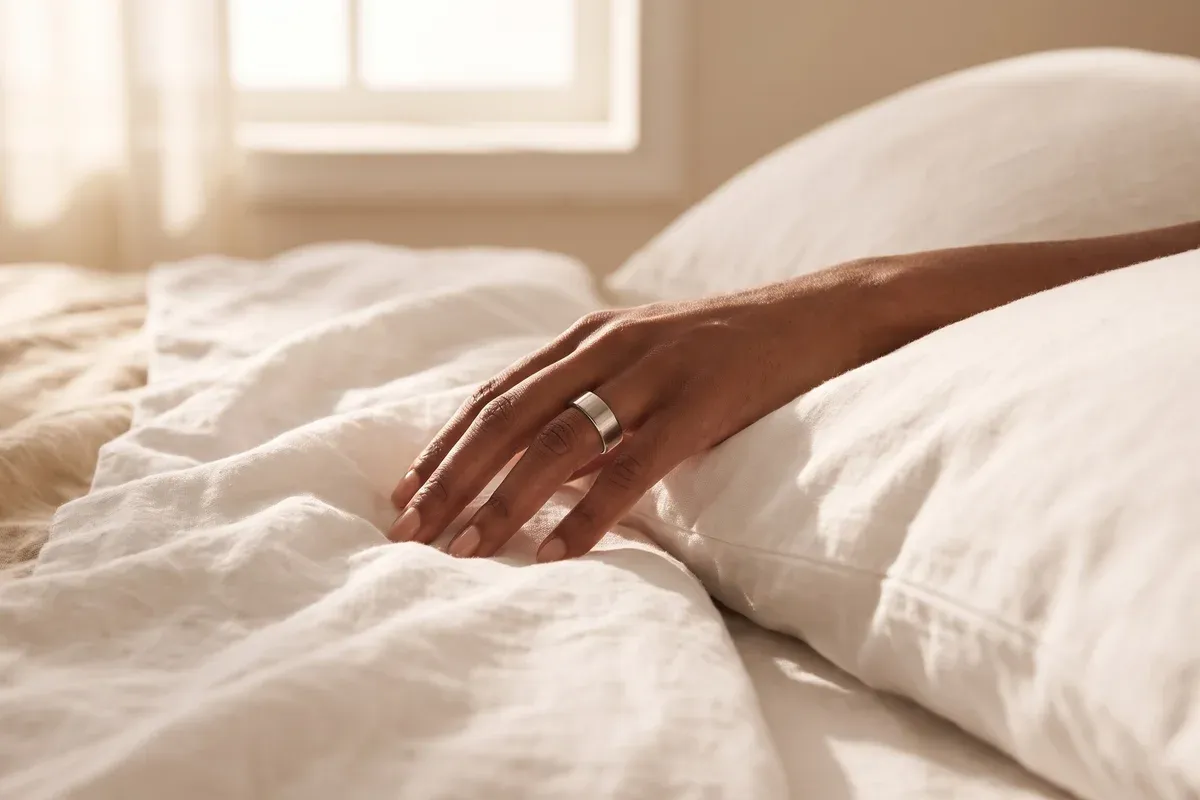
Sisly is a titanium ring or band that reads sleep, energy, stress, heart rate variability, activity and skin temperature, and shows each one against your own normal rather than against other people. During a hot spell, that can make a pattern visible: a slightly higher resting heart rate, a lower HRV, a shorter night. Seeing it against your own normal helps you read a hot week as a hot week.
Sisly is not a medical device. It cannot diagnose heat illness, and no reading should talk you out of how you feel. Dizziness, confusion or collapse need care, whatever any screen says.
When should you see a doctor?
Call an ambulance for any heat stroke sign listed above, or for anyone who is still unwell after 30 minutes of rest, cooling and fluids.
Speak to a doctor soon if you have heat symptoms that keep coming back, if you take regular medicine and are not sure how it works in the heat, or if you have a heart, lung, kidney or diabetes condition and feel different in the summer months.
And if something feels wrong, rather than just tired, trust that. Talk to your doctor.
The heat in one table
| What you notice | What is happening | What helps |
|---|---|---|
| Heavy sweating, thirst | Evaporative cooling, water and salt loss | Fluids, a sports drink after long effort, shade |
| A faster heartbeat at rest | More blood sent to the skin, heart pumps more often | Cooler hours, cooler rooms, time to adapt |
| Humid evenings feel worse | Less sweat can evaporate | Moving air, shade, shorter time outside |
| Shorter, lighter nights | A warm bedroom slows the drop in core temperature | A cooler, darker bedroom |
| Dizziness, headache, cramps | Heat exhaustion | Cool place, fewer clothes, water, cool the skin |
| Confusion, hot dry skin, seizure | Heat stroke | Call 998 (UAE) or 997 (Saudi Arabia) and keep cooling |
| The first days back from a cool trip feel hard | Acclimatisation has faded | Two or three easier days |
Glossary
Acclimatisation. The changes that let the body cope better with heat after repeated exposure: earlier and heavier sweating, less salt in sweat, a lower heart rate for the same work.
Cardiac output. The volume of blood the heart pumps each minute. It rises in the heat.
Core temperature. The temperature deep inside the body, held close to 37°C.
Heat exhaustion. A heat illness with heavy sweating, dizziness, headache, nausea, cramps and thirst. It usually eases within 30 minutes of cooling and fluids.
Heat stroke. The body losing control of its temperature. A medical emergency.
Heart rate variability (HRV). The small change in time between one heartbeat and the next. It tends to fall when the body is under load.
Relative humidity. How much water vapour the air holds, compared with the most it could hold at that temperature. High humidity slows the evaporation of sweat.
Resting heart rate. Your heart rate when you are still and relaxed, usually measured during sleep or on waking.
Skin temperature. The temperature at the surface of the skin. It rises as the body sends blood outward to shed heat.
Questions, answered
- What are the first symptoms of heat exhaustion?
- The early signs are usually tiredness, dizziness, a headache, feeling sick, heavy sweating with pale and clammy skin, cramps in the arms, legs or stomach, and strong thirst. The NHS also lists a high temperature and feeling irritable. They can come on during a long walk, a match or a day of outdoor work, and they often ease quickly once the person is cooled and given fluids.
- How do I know if it is heat stroke and not heat exhaustion?
- Heat stroke is the body losing control of its temperature. The NHS signs include a very high temperature, hot skin that is not sweating, a fast heartbeat, fast breathing, confusion, a lack of coordination, a seizure or loss of consciousness. Someone who is still unwell after 30 minutes of rest, cooling and fluids also needs urgent help. In the UAE call 998; in Saudi Arabia call 997.
- Why is my resting heart rate higher in summer?
- To lose heat, the body moves a large share of its blood to the skin, and the heart beats faster to keep blood pressure steady. A review in Comprehensive Physiology describes cardiac output rising up to twofold under heat stress, mainly through heart rate. Warm nights add to it: a 2025 study found higher heart rates and lower heart rate variability in older adults sleeping in warmer bedrooms.
- How long does it take to get used to the heat?
- The US workplace health agency NIOSH says new workers need about 7 to 14 days of gradually longer heat exposure to acclimatise. People who have lived in the heat before adapt faster. After a week or more away, for example a summer holiday somewhere cool, some of the adaptation fades, and it typically takes 2 to 3 days to come back.
- Is humid heat worse than dry heat?
- For the body, often yes. Sweat cools you only when it evaporates. As humidity rises, a smaller share of your sweat evaporates and more of it drips off or sits on the skin, as a 2023 review in Environmental Health Perspectives explains. That is why a humid evening on the coast can feel harder than a hotter, drier afternoon inland.
- What are the hottest hours of the day in the UAE and Saudi Arabia?
- Both countries mark the middle of the day as the hardest stretch in summer. From 15 June to 15 September, the UAE bans outdoor work in direct sun from 12:30 to 3 pm, and Saudi Arabia bans it from 12 noon to 3 pm. The NHS gives similar advice for heatwaves in the UK: stay in the shade between 11 am and 3 pm.
- Can a smart ring tell me if I have heat exhaustion?
- No. A smart ring is not a medical device and cannot diagnose heat illness. Sisly reads sleep, energy, stress, heart rate variability, activity and skin temperature against your own normal, so a run of hot days may show up as a pattern. How you feel comes first: dizziness, confusion or collapse need care, whatever any device says.
This article is general information, not medical advice. Speak to your doctor before changing your diet or exercise.
Sources
- WHO, Heat and health fact sheet ·
- NHS, Heat exhaustion and heatstroke ·
- NHS, Heatwave: how to cope in hot weather ·
- CDC NIOSH, Heat stress acclimatization ·
- CDC NIOSH, Heat-related illnesses ·
- Crandall and Wilson, Human cardiovascular responses to passive heat stress, Comprehensive Physiology, 2015 ·
- Baldwin et al., Humidity's role in heat-related health outcomes, Environmental Health Perspectives, 2023 ·
- O'Connor et al., Effect of nighttime bedroom temperature on heart rate variability in older adults, BMC Medicine, 2025 ·
- Okamoto-Mizuno and Mizuno, Effects of thermal environment on sleep and circadian rhythm, Journal of Physiological Anthropology, 2012 ·
- Minor et al., Rising temperatures erode human sleep globally, One Earth, 2022 ·
- WMO climate normals 1991 to 2020, Dubai International Airport (via NOAA NCEI) ·
- WMO climate normals 1991 to 2020, Al Ain International Airport (via NOAA NCEI) ·
- WMO climate normals 1991 to 2020, Riyadh (via NOAA NCEI) ·
- UAE Government portal, Mid-day break during summer ·
- Saudi Ministry of Human Resources and Social Development, ban on work under the sun from 15 June ·
- UAE Government portal, Handling emergencies ·
- Saudi National Platform, Emergency contact numbers ·